

As your loved ones age, their needs evolve, and it becomes crucial to assess whether their current living situation is still suitable for their well-being. At Remember Me Senior Care, we understand the importance of recognizing the signs that may indicate it's time to consider assisted living or memory care. Here are seven key indicators, each serving as a gentle nudge toward ensuring the best possible care for your aging parent.
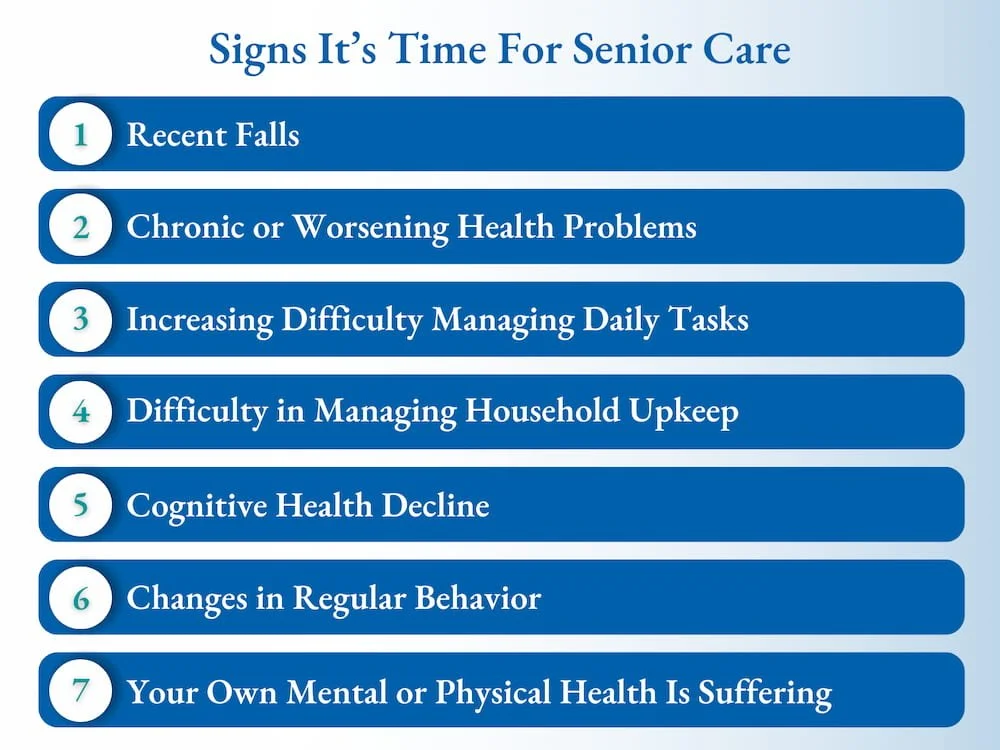
1. Recent Falls
One of the most apparent signs that it may be time to consider a senior living community is the occurrence of recent falls. Frequent falls can be indicative of declining mobility and balance, putting your loved one at an increased risk of injury.
2. Chronic or Worsening Health Problems
Persistent health issues can significantly impact your loved one's quality of life. Chronic conditions that worsen over time may necessitate a level of care that assisted living or memory care communities can provide. Senior living communities ensure consistent medication management, offering residents and their loved ones peace of mind.
3. Increasing Difficulty Managing Daily Tasks
As individuals encounter increasing difficulty in managing tasks that were once routine, it may serve as a signal of a potential decline in cognitive or physical abilities. Senior living communities provide a compassionate and helping hand, empowering residents to navigate daily life with ease and dignity.
4. Difficulty in Managing Household Upkeep
Difficulty in managing a home or yard upkeep may point to challenges in maintaining the responsibilities of living independently. Senior living communities address these concerns by ensuring that living spaces are consistently well-maintained.

5. Cognitive Health Decline
Declining personal hygiene, wandering, and disorientation among seniors not only signify potential cognitive challenges but also pose health and safety risks. Assisted living communities implement secure features such as locked doors, monitored exits, and carefully planned layouts to prevent wandering.
6. Changes in Regular Behavior
Observable changes in a senior's regular behavior, such as increased isolation, mood fluctuations, or even aggressive tendencies, may be indicators of emotional distress or discomfort. Senior living communities curate a variety of social activities and engagement opportunities to counter isolation.

7. Your Own Mental or Physical Health Is Suffering
Caring for an aging loved one often results in a significant toll on your own well-being. Signs that you might be experiencing caretaker burnout often include feelings of helplessness, withdrawal from friends and family, changes in appetite, frustration or anger toward others, and fatigue.
Navigating the decision to transition a loved one to senior living is a complex and emotional process. Recognizing these signs early on allows for thoughtful consideration and planning, ensuring that your loved one receives the care and support they deserve. At Remember Me Senior Care, we are here to guide you through a senior living journey and provide compassionate care your family deserves. For more questions please don't hesitate to reach out to us, our dedicated team is here to assist you and provide the support and information you and your family need.